SEO vs AEO vs GEO: Comparison Table
| Feature | SEO | AEO | GEO |
| Full Form | Search Engine Optimization | Answer Engine Optimization | Generative Engine Optimization |
| Main Goal | Improve visibility in search results | Help content appear as direct answers | Improve visibility in AI-generated responses |
| Primary Focus | Rankings, organic traffic, and relevance | Clear, direct answers to user questions | Content understanding, brand mentions, and AI citations |
| Platforms | Google, Bing, and other search engines | Featured snippets, voice assistants, and answer engines | ChatGPT, Google AI Overviews, Perplexity, and similar AI search experiences |
| Content Strategy | Relevant, well-optimized web pages | Question-based content and concise answers | Helpful, authoritative content with original insights |
| Key Techniques | Keyword research, technical SEO, backlinks, on-page SEO | FAQs, structured answers, clear headings, structured data where relevant | Original research, topical depth, credible sources, and brand authority |
| Success Metrics | Organic traffic, rankings, clicks, conversions | Answer visibility, featured snippets, relevant referral traffic | AI citations, brand mentions, referral traffic, and visibility where measurable |
| Relationship | The foundation for search visibility | Complements traditional SEO | Extends SEO practices into generative AI discovery |
The process of search is evolving faster than ever before. Previously, people had to type a query in Google and select one of the sites provided in the search results. Nowadays, the situation is slightly different – users ask questions to AI-powered systems, explore AI-generated summaries, and get concise answers without having to visit multiple sites.
With the evolution of this search process, two important terms in digital marketing. Let’s discuss the Answer Engine Optimization (AEO) and Generative Engine Optimization (GEO).
If you already have some SEO background, it will be much easier for you to understand these concepts. As in traditional SEO, AEO and GEO imply certain activities to improve the way content is discovered, understood, and referenced in search engines and generative AI platforms.
We will discuss the definition of GEO and AEO, their difference from SEO, and reasons for the importance of these practices for businesses.
What Is SEO, and Why Is Search Evolving?
Search Engine Optimization (SEO) is a set of actions to optimize a website so that pages on it can be featured in search results of the engine. SEO suggests keyword research, content and website optimization, internal linking, etc. So that the search engines can understand the website.
Despite several processes in the search engines, and changes in user behaviors, SEO basics still apply. Search engines need to be able to crawl, index, understand and rank pages so that they can return valuable results.
However, the users engage with the search differently – they don’t necessarily get a list of links, but rather an AI summary, or answers in the conversation, or even combining information from multiple resources.
These changes make room for the new optimization practices – AEO and GEO. They build on many existing SEO practices while placing additional emphasis on how information is presented, understood, and used in AI-powered search experiences.
What Is Answer Engine Optimization (AEO)?
Answer Engine Optimization (AEO) is the process of structuring content so that answer engines would be able to understand and feature relevant information in response to the user’s question.
For example, a user could ask such questions:
- What is technical SEO?
- How does keyword research work?
- What digital marketing skills should a beginner learn?
- What is the difference between SEO and AEO?
What do all of these searches have in common? The user wants to get an answer.
Answer engine optimization (AEO) makes the process of finding an answer easy for the user. This can be accomplished by providing various explanations, sub-headings, FAQs, and proper structuring of the information.
For instance, if you were required to explain answer engine optimization (AEO) in your article, you would start by briefly explaining what AEO is, and you would elaborate more on the benefits of AEO, techniques and other aspects of AEO.
However, using FAQs and concise explanations doesn’t necessarily mean your content would be indexed by search features. The information that you give should be relevant and accurate.
How Can You Improve AEO?
There are some things you can do to improve AEO, which include the following:
- Answer the central question in a concise way at the start of a section.
- Use relevant headings for the questions that are asked by the users.
- Be concise in providing explanations but at the same time not missing any key information.
- Add relevant FAQs to your pages if you have them.
- Structure the data in such a way that it corresponds to the page.
- The information that is provided should be updated and correct.
The purpose of answer engine optimization is not to make every single article shorter.
What Is Generative Engine Optimization (GEO)?
Generative Engine Optimization (GEO) implies actions to increase the chances that your content, brands or expertise will be understood and used as a part of a response to the user’s question generated by a system powered by AI technology.
For example, a user could ask one of the AI systems a question like below:
“What should a small business consider before choosing an SEO agency?”
After the answer, the system would be able to talk about factors and even cite sources from the chosen ones.
GEO also recommends that the content produced needs to be understandable and able to fit within the context of answer engines.
As such, for you to make your content indexed by AI systems, you must make sure that you present relevant, informative, correct, and comprehensible information.
For instance, a website that focuses on digital marketing can come up with an in-depth article regarding local SEO with relevant examples along with accurate explanations, original research, and credible sources.
There is no guaranteed formula of getting mentioned in an AI-generated answer. The methods used by different platforms vary depending on the way of retrieval, ranking, and response generation. Generative Engine Optimization (GEO) is therefore better to be considered as a continuation of strong content and SEO practices.
How Can You Improve GEO?
Some actions that business can take in order to boost GEO:
- Publish content that is relevant and original and is not just the copy of information available elsewhere.
- Show your expertise and relevant experience.
- Prove the facts with relevant sources.
- Use clear headings and well-structured content.
- Make sure that information about your business is up to date in relevant platforms.
- Make your brand recognized through credible mentions and useful resources.
- Monitor AI search visibility in case relevant methods of tracking are available.
GEO is not about insertion of keywords into the article. It is about providing search systems with useful information that can be interpreted in the context of a user’s question.
AEO vs. GEO: What Is the Difference?
Despite many similarities, AEO and GEO have different focuses.
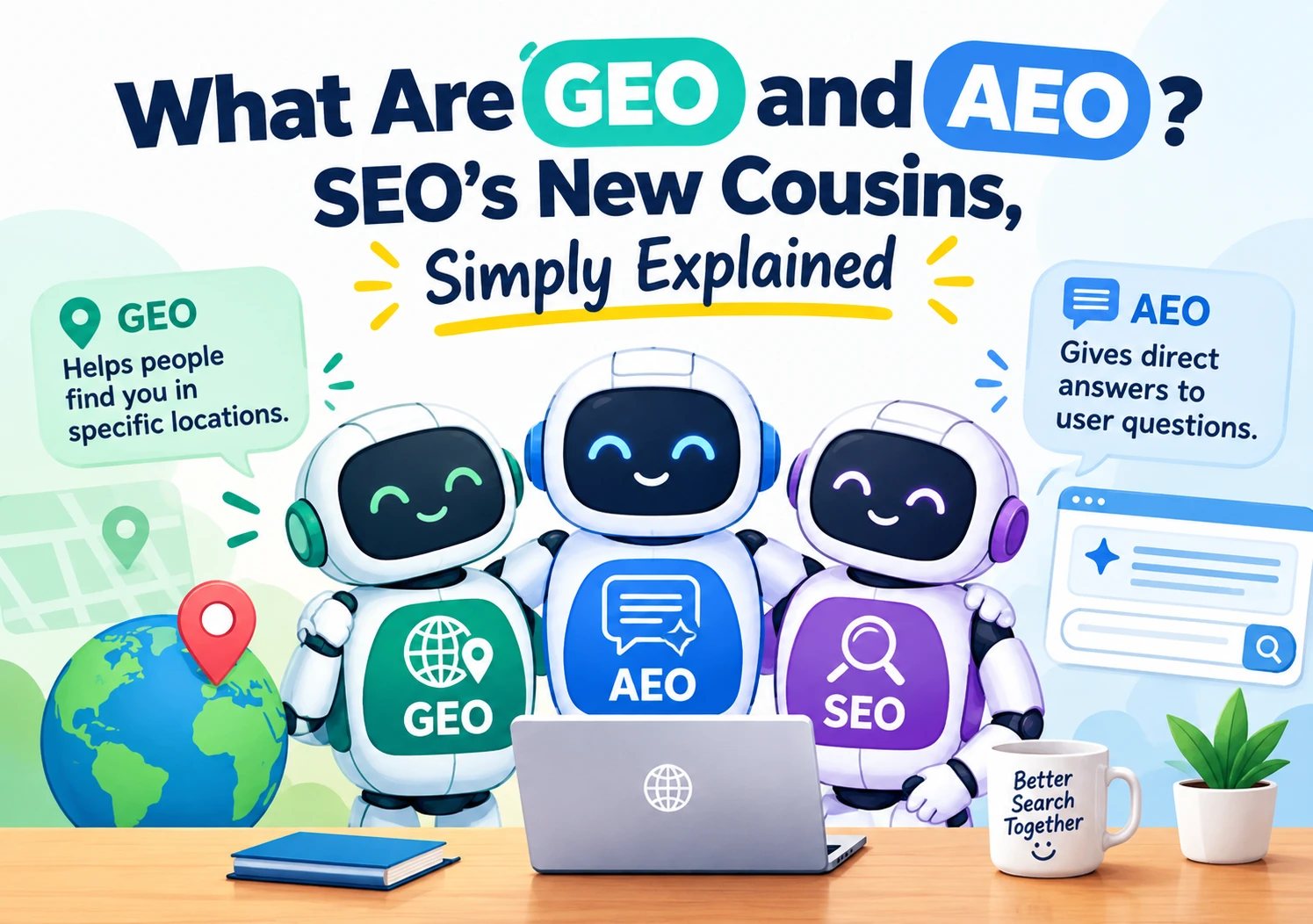
AEO implies answers. It is aimed at making it easy for answer engines to feature the information in a response to the particular question.
GEO is focused on generative AI visibility. It is aimed at making the content and brand information clear and potentially useful in response generated by AI systems.
For example, a short explanation of “What is on-page SEO?” is a natural AEO task. A detailed resource that explains on-page SEO with examples, insights, and other related topics is also helpful for GEO.
Neither of these techniques replaces traditional SEO. In practice, they are performed simultaneously with it.
How Are GEO, AEO, and Traditional SEO Connected?
Consider SEO in terms of building a foundation for the knowledge of the website that search engines have.
Answer Engine Optimization (AEO) is based on this foundation and emphasizes the need to provide clear and concise answers to certain questions.
Generative Engine Optimization (GEO) is an expansion of this approach and means creating clear and useful content in the context of an answer created by AI.
Both techniques are related to useful content, solid technical foundation, correctness of information, and good UX.
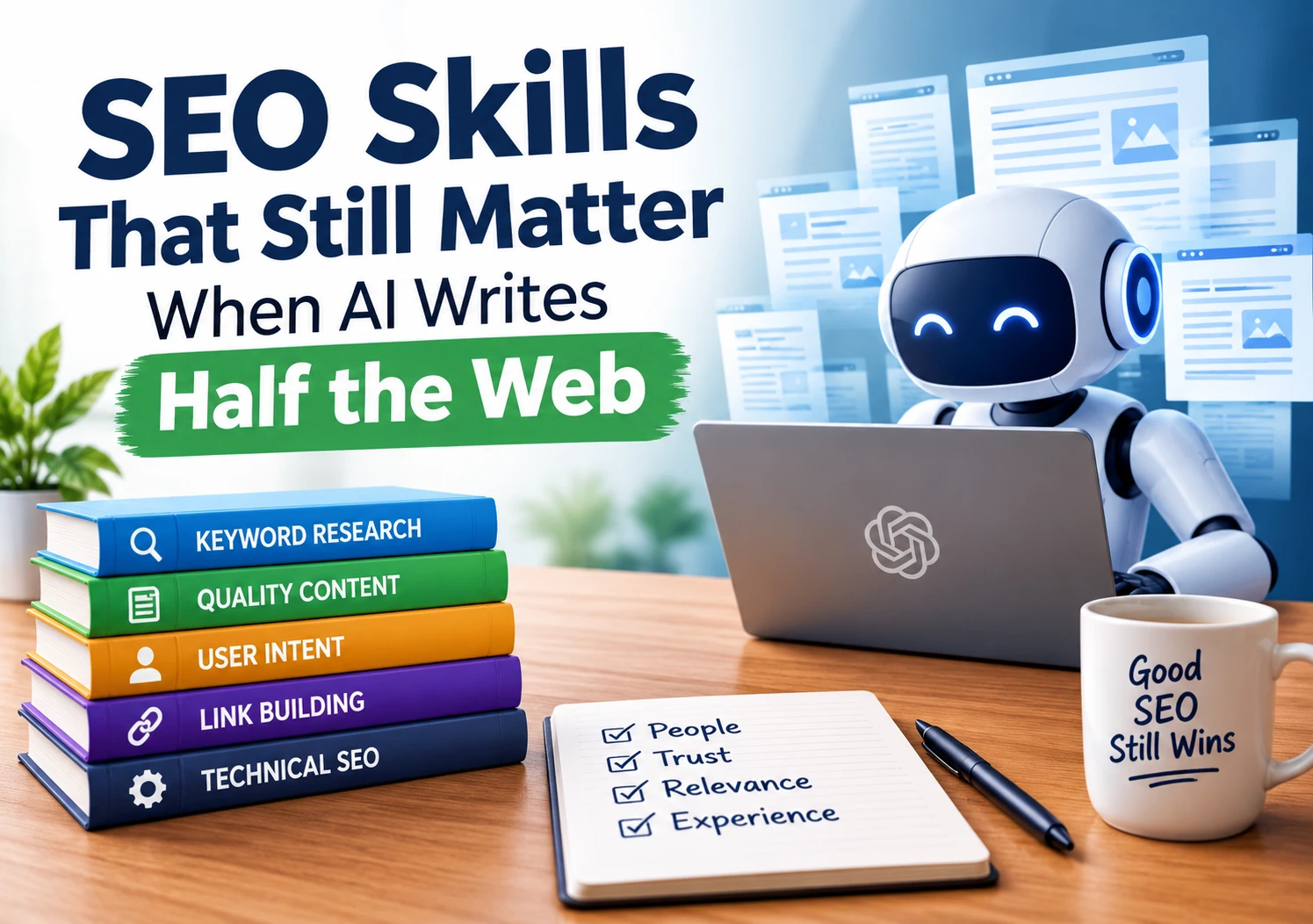
This is the reason why a company should not stop implementing its SEO strategy even in the light of progress of AI searches. Pages of websites still need to be easily accessible, provide relevant information, and be structured properly.
What Role Do Keywords Play in GEO and AEO?
Keywords still play a role, however, it is important not to limit the strategy to the repetition of phrases in an article.
In order to conduct SEO search optimization properly, marketers have to learn about the questions, problems, and language of their audience. This implies identification of related topics, conversational queries, and long-tail search terms.
For example, a business could target the keyword “SEO optimization”. Apart from it, the business could create useful content on such topics as “How does SEO optimization work?” or “How can a small business improve its search visibility?”.
These related topics help to make a more complete resource.
For GEO and AEO, it is important to explain concepts clearly, connect related ideas, and provide useful information. The keywords have to fit into the content organically.
Common GEO and AEO Mistakes to Avoid
Despite the growing popularity of AI search, there are several common mistakes that can ruin the content and waste a lot of time.
Publication of Large Amounts of Generic AI Content: Just having a lot of content is not equal to the visibility – pages have to be valuable for readers.
Neglecting Technical SEO: Poor crawlability, indexing, and structure of your site could lead to problems independently from the search platform.
Adding FAQs without any purpose: FAQs have to answer real questions of the users, not provide an extra place for keywords.
Expecting Instant Results: GEO and AEO are developing practices and the visibility could be different in various platforms. No optimization technique guarantees a citation or a featured answer.
Forgetting About the Reader: Content created just for the algorithm often misses the main purpose.
Learn Modern SEO With Khode Campus
As search engines and AI-powered platforms are constantly evolving, it is important for digital marketers to learn not only the fundamentals of SEO but also modern approaches like AEO and GEO. Khode Campus allows learners to develop their digital marketing knowledge and acquire practical SEO concepts. Such knowledge can include keyword research, on-page optimization, technical SEO, content strategy, and search visibility.
FAQ’s
What is the difference between GEO and AEO?
Answer Engine Optimization (AEO) focuses on making content easy for answer engines to identify and present in response to specific questions. Generative Engine Optimization (GEO) focuses on improving the chances of content and brand information being understood, referenced, or cited in AI-generated responses. Both complement traditional SEO.
Is GEO replacing traditional SEO?
No, GEO is not replacing traditional SEO. Technical SEO, keyword research, quality content, website structure, and relevant backlinks remain important. GEO builds on these fundamentals to help businesses improve their visibility across AI-powered search experiences.
Why are GEO and AEO important for digital marketing?
GEO and AEO are becoming relevant as users increasingly discover information through AI-powered search and conversational answer tools. Understanding these approaches can help businesses create useful content, strengthen their online presence, and explore additional ways to reach their target audience.