Overview of the Content
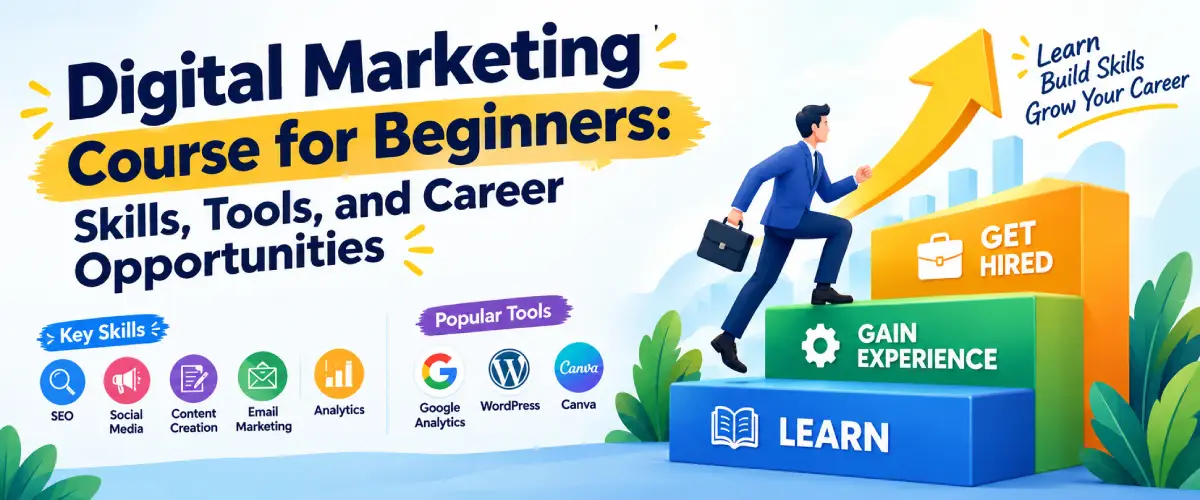
Digital Marketing Course in Coimbatore is a growing sphere that helps businesses promote themselves online via search engines, social media platforms, websites, e-mailing campaigns and online advertising. Starting their journey, beginners willing to learn digital marketing can find various ways to become specialists in this sphere without any technical background. This paper will explore what topics and skills a digital marketing course covers, what tools beginners should learn and the possible career options for those having passed such courses. Moreover, the way to select the appropriate course and acquire the necessary experience will be considered.
What Is Digital Marketing?
Think about the times when you searched for a product via Google, watched any branded videos on Instagram or received an advertising letter from a certain online store. All these actions are connected to digital marketing.
The concept of digital marketing refers to the sphere of promotion of goods, services or brands via online channels. Businesses employ these methods in order to attract potential buyers, to create brand awareness, generate leads and increase sales.
In comparison with classic marketing, digital marketing enables us to measure various indicators of a campaign, visits to the website, clicks, conversions and other actions of consumers.
For beginners, digital marketing is an easily accessible sphere, which consists of creativity, communication, analytical skills and techniques.
Even though the sphere requires basic coding skills in the future, a person can begin his/her journey without any experience in coding.
What Does a Digital Marketing Course in Coimbatore for Beginners Teach?
Usually, a Digital Marketing Course in Coimbatore for beginners introduces students with the key online marketing channels and describes the ways for a business to use them and reach the target audience. The particular content of a course varies by the institute, therefore, it is important to find out if there are any projects or modern tools taught within the program.
1. Search Engine Optimization (SEO)
SEO (Search Engine Optimization) is the sphere of optimization of websites in organic search results on Google, Bing and Yandex. Every time people try to find certain information, products or services via search engines, businesses would like to make sure that the right pages of their websites are visible to the users.
Beginners can study keyword research, on-page optimization, basic technical SEO, backlinks, internal linking and content optimization.
Moreover, students can be taught to use such tools as Google Search Console, Google Analytics. Search Engine Optimization is useful for those who enjoy conducting research, making content plans, problem-solving, and working with website data.
2. Social Media Marketing
Social media marketing is a practice of promotion of a business via various social media networks including Instagram, Facebook, LinkedIn, YouTube.
Here students become familiar with ways to schedule a calendar, work out strategies and tactics, find the audience, produce posts that will be engaging and promote a certain brand voice and then analyze their engagement.
For the beginners with content creation and communication experience it can be a great starting point to understanding online trends.
3. Search Engine Marketing and Paid Advertising
With the help of paid advertisement a company is able to promote itself and target a certain audience via sponsored content. Such types of advertisements can be for example Google ads and social media campaigns.
In case of the beginner-level course there will be covered goals of the campaign, the process of its creation from finding the right audience to setting the budgets, measuring performance using certain indicators such as cost per click, conversion rate and return on ad spend it helps evaluate whether advertising campaigns are delivering results.
4. Content Marketing
Content marketing is aimed at engaging audiences with useful and quality information. Blogs, videos, guides, newsletters and various social media posts are the forms of it.
Beginners learn here about the needs of the audience and how to discover them, researching topics and writing the content, creating content briefs and developing articles.
Quality content marketing isn’t just producing a lot of content. The main goal here is providing useful information and creating trust with the help of it.
5. Email Marketing and Analytics
An introduction to Email Marketing includes learning how to use newsletters, promotional messages and automated email sequences for communicating with your business subscribers.
The role of Analytics comes into play here as well because it can tie everything together – teaching beginners about tracking things like website traffic, campaign performance and more to analyze their results.
And that means you’ll be making smarter decisions instead of relying only on gut instincts!
Essential Digital Marketing Skills for Beginners
Learning the tools is important, but developing the right skills is equally valuable. Employers often look for people who can understand business goals and apply their knowledge to real marketing problems.
Some important skills to develop:
- Communication skills – To be able to explain your thoughts well via email, report, advertisement etc.
- Content writing – Ability to create useful and read content on website/blog/social media etc
- Analytical Thinking – understanding of campaign data & pointing out areas where improvement is required
- Creativity – Develop creative ideas which grab people’s attention while keeping an eye on your business objectives.
- Research – Into who your competitors are, how your customer behaves, what keywords do they search for? What are the trends that you can capitalize on?
- Adaptability – Being able to learn about new platforms, marketing strategies and new ways to utilise the power of AI.
- Time Management Skills – Managing various campaigns and content schedules at one go.
You don’t have to be an expert on all these skills to apply for your very first role – with consistent practice and a willingness to learn, you’ll continue to improve over time.
Digital Marketing Tools Beginners Should Know
Digital marketing involves several tools, but beginners do not need to learn everything at once. Start with a few tools that match your learning goals.
|
Tool |
What It Helps You Do |
|
Google Analytics 4 |
Analyze website traffic and user interactions |
|
Google Search Console |
Monitor search performance and indexing information |
|
Google Ads |
Create and manage paid search campaigns |
| Google Keyword Planner |
Research keyword ideas and advertising estimates |
|
Canva |
Design social media graphics and marketing creatives |
|
Meta Ads Manager |
Manage Facebook and Instagram advertising |
|
Mailchimp |
Create email campaigns and marketing automations |
| ChatGPT | Brainstorm ideas, organize research, and draft content for human review |
Some tools offer free features, while others require paid plans or have usage limitations. Beginners can start with accessible options and explore advanced features as their skills develop.
The most important thing is to understand why you are using a tool, what information it provides, and how that information supports a marketing decision.
Career Opportunities After a Digital Marketing Course
Digital Marketing Course in Coimbatore includes several specializations, allowing beginners to explore roles that match their interests and strengths. Your first job title and responsibilities will depend on your practical skills, portfolio, location, and the employer.
Common Digital Marketing Career Paths
Digital Marketing Executive – Managing marketing initiatives to support digital marketing goals. Ensuring marketing campaigns by tracking and analyzing performance.
SEO Executive – Improving marketing effectiveness by keyword analysis and search optimization of web pages and social media.
Social Media Executive – Planning and managing marketing activities via social media to attract and engage followers. Tracking and reporting on social media engagement metrics.
Content Writer – Write blog articles, website copy, landing pages, and various other kinds of content that’ll be used for marketing.
PPC or Performance Marketing Executive – Manage paid campaigns, watch the cost of advertising and work on improving conversion rates.
Email Marketing Executive – Work with sending newsletters, running email campaigns, audience segmentation, etc.
Digital Marketing Analyst – Reviews marketing data, creates reports, and identifies ways to improve your campaign’s performance.
As you gain more experience in this field, you can move on to become a specialist, strategist, team lead – or marketing manager. Essentially, if you decide to freelance or start a small digital marketing agency, you’ll have plenty of opportunities to build upon your skills.
How to Choose the Right Digital Marketing Course
Not every institute provides the same learning experience. Before enrolling, consider the following factors.
See if there is information about syllabus on the internet: This may include Search Engine Optimization, social media marketing, paid advertising, content marketing, and analytics.
Seek out practical learning: Hands-on experience with website creation, campaign examples, keyword analysis, and analytic reports allows you to put what you learn into practice.
Inquire about the software used: This course would introduce the tools that professionals in the field commonly use.
Evaluate the experience of the teachers: Trainers that know about the processes in the field may know better how to overcome typical problems and explain workflows.
Seek portfolio creation: Various project-based exercises, case studies, and campaign simulations may be used by the employers to determine your skills.
Learn about placement: If the course offers any job assistance, see what services are included in this. Don’t be sure that the completion of a course will automatically land you a job.
How Beginners Can Build Practical Experience
You don’t have to wait until you’ve learned everything before starting to gain hands-on experience. There are many opportunities to get involved, including taking on small projects that will teach you more about the way various digital marketing channels interact. Here are some ideas to jump-start your career.
Create a simple website covering topics that you know well. Research relevant keywords related to these topics. Write several helpful articles based on this research and link them appropriately with headings and internal links. Learn how to use analytic tools if available, and monitor activity on the website. Prepare a sample content calendar for social media for a local business. Design a mock advertising campaign. Create an email newsletter for a hypothetical product.
Write down what you did, why you decided on that path, and what you learned from your experience. You can then use these examples for building up a beginner portfolio – and they will provide you with concrete talking points when preparing for an interview!
Learn Digital Marketing with Khode Campus
Are you thinking of making a start to your career as a Digital Marketer? Then come up with Khode Campus where you will get started to learn structured things about Digital Marketing Skills. From SEO to Social Media Marketing, Content Creation, Paid Advertising to Analytics, we have everything that makes you understand how to work practically with various Tools of Industry. You might be a Student/Recent Graduate/ or maybe want some new Skill for your Career. Whatever your situation is, we will ensure you understand all kinds of Challenges of the Real World through our Training & Projects. So that after your training, you would be ready to grab Entry Level Job Opportunities available in the Digital Marketing Industry.